

From Events to Engines of Growth: Transform Your Trade Show Presence
You invest six-figure budgets in stand construction, staffing and logistics. After three days at a trade show, you have 200 contacts in your CRM. And three months later? Still no predictable sales pipeline.
The problem isn’t the trade show. Often, it’s the lack of a systematic approach.
Trade shows remain a goldmine for B2B marketing. Few other platforms offer so much potential to generate leads, build valuable connections and showcase your brand at its best. But simply showing up isn’t enough. You need to promote your stand. What you need is a scalable strategy that turns your trade show presence into an engine for lead generation and customer retention.
In this article, we share 16 highly effective tactics to transform your trade show presence, with a clear focus on interactivity, innovation and data. Here’s how to market your stand effectively.
In this article:
- From Events to Engines of Growth: Transform Your Trade Show Presence
- Before the Show: Get Ahead with a Structured Approach
- During the Show: Drive Attention and Engagement
- After the Show: Follow Up and Optimise
- Summary: Your Roadmap to Trade Show Success
Promoting Your Stand: Turn Your Trade Show Presence into a Predictable Lead Generation Engine
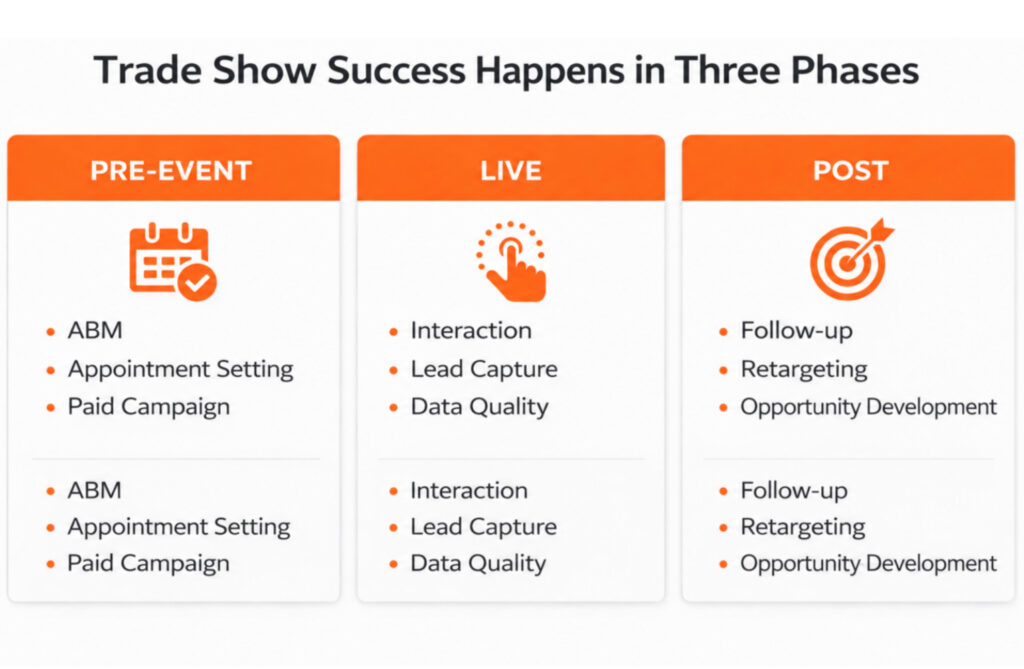
A professional trade show presence doesn’t automatically attract the attention of the right audience. Simply having a stand, without actively promoting it, means missing valuable opportunities, especially when every event is competing for visibility.
That’s why you need an integrated digital campaign that starts before the show, drives engagement during the event and systematically converts that engagement into qualified leads afterwards. This is how you turn a single event into a scalable pipeline of meaningful conversations with prospective customers.
Why Trade Shows Matter More Than Ever
Today, a trade show is much more than a traditional exhibition or simply a conference. It is a highly concentrated marketplace where qualified attendees, decision-makers and trade show visitors come together within a short period of time. For B2B companies, this is one of the few opportunities to meet potential customers in person and directly experience the impact of their own marketing.
Unlike digital only channels, trade shows enable direct personal interaction. Conversations, spontaneous product demonstrations and immediate questions provide valuable signals for evaluating performance later. Every encounter offers the opportunity to turn an initial touchpoint into a meaningful conversation with revenue potential.
At the same time, competition is intensifying. In a hall full of exhibitors, countless promotional activities, visual assets and eye-catching stand concepts compete for the same audience. Visibility alone is no longer enough. What matters is how thoroughly you prepare, how effectively you use data during the event and how systematically you evaluate your results.
Only by accurately measuring reach, conversations and the leads they generate can you make trade shows a predictable contributor to marketing and sales success.
Before the Show: Get Ahead with a Structured Approach
A successful event starts weeks before the first visitor arrives. This is when you define your objectives, prioritise your budget and lay the groundwork for measurable lead generation results. In B2B marketing, systematic preparation is essential for turning visibility into genuine sales opportunities.
1. Choose the Right Trade Show
Not every trade show is relevant to your target audience. What matters is whether an event attracts the right attendees, decision-makers and prospective buyers.
- Assess the following:
- Industry focus and relevance of the topics covered
- Attendee quality and seniority
- Expected number of qualified visitors
- Historical lead generation performance of comparable events
With 2026 in focus and trade show costs rising, it is increasingly important to base investment decisions on data rather than instinct.
2. Use Omnichannel Marketing with an ABM Focus
A stand alone isn’t enough. Successful exhibitors launch an integrated campaign well in advance, connecting digital and physical touchpoints.
Account-based marketing (ABM) allows you to target companies that closely match your ideal customer profile through LinkedIn Ads, email sequences, personalised landing pages and retargeting. Modern technology, including AI, helps you segment audiences more precisely and deliver personalised content.
This builds awareness before the show among the accounts that matter most to your sales success.
3. Plan with Data, Not Guesswork
A professional trade show strategy starts with clearly defined KPIs. These include:
- Number of meetings booked in advance
- Cost per lead (CPL)
- Potential sales pipeline value after the event
- Conversation-to-opportunity conversion rate
Digital tracking and structured measurement give you visibility into these metrics. This allows you to fine-tune your marketing activities before the first day of the show.
4. Create an Appealing Stand Design
Your stand gives visitors their first impression of your brand, before they explore your products or services in more detail:
- Use technology: Gamified elements or AR/VR experiences let visitors explore your products interactively. Want an example?
- Keep your branding consistent: Your stand design should immediately communicate what your brand stands for.
Interactive elements, clever promotional materials and technology can all spark conversations. The key is to ensure that every activity addresses your audience’s needs and fits into your overall campaign strategy.
During the Show: Drive Attention and Engagement
The event is your stage. This is where visibility needs to translate into meaningful conversations and qualified sales opportunities. Successful exhibitors focus on interaction, clear processes and the purposeful use of digital technology.
5. Run Interactive Live Demos
Show visitors the value of your products first-hand. Schedule regular demonstrations that attract attention and keep visitors engaged. They’re a great way to promote your stand:
- Short, compelling presentations
- Hands-on trials or product walkthroughs that build confidence
6. Share Your Expertise
Workshops, masterclasses and short talks position your company as a knowledgeable provider at the show. Deliver genuine value, and visitors will remember you for longer. You’ll also raise the quality of the conversations taking place at your stand.
7. Drive Engagement with Gamification
Targeted activities such as quizzes and short surveys attract attention and help you segment visitors systematically. Gamification increases dwell time and provides valuable data for subsequent performance analysis. Examples include:
- Quizzes or prize draws relevant to your industry or offering
- Competitions with appealing prizes that also help you segment your audience
- On-the-spot polls
8. Choose Relevant Giveaways to Reduce Wasted Spend
Giveaways should be more than creative. They should be relevant to your audience. Sustainable merchandise or digital incentives, such as exclusive content or webinar access, increase the impact of your marketing and extend your campaign beyond the show.
Here are a few ideas:
- Sustainable products such as recyclable notebooks or seed packets
- Digital gifts, including exclusive access to webinars, e-books or video series that deliver value and strengthen your brand
- Practical tech accessories, such as cable organisers or screen cleaners, that are both useful and environmentally friendly
- Everyday accessories, such as stainless steel water bottles or reusable travel mugs featuring your branding
9. Use Social Media Strategically
Social media can amplify the impact of your trade show presence:
- Live updates: Share photos, videos and experiences from your stand. Remember that this is a full-time job, so allocate internal resources or work with an agency partner.
- Hashtag campaigns: Extend your reach through content shared by attendees.
- Target attendees with paid media: Amplify your campaign with geofenced ads around the trade show venue.
10. Digitise Your Lead Management
Business cards are not a system. QR codes, tablets and badge-scanning tools let you capture prospect data consistently and transfer it directly into your CRM. This makes it easier to prioritise qualified leads and follow up promptly.
11. Make Data-Driven Adjustments
Use analytics to optimise engagement during the show:
- Analyse visitor behaviour on your landing pages before the event. Alongside your own web analytics, many trade show organisers offer digital tools to support this.
- Adjust your tactics in response to emerging patterns in visitor behaviour.
- Personalise your outreach to key accounts: Use account-based marketing to engage your most valuable visitors individually and deliver content tailored to their specific needs.
12. Offer Exclusive On-Site Deals
Create incentives with special offers available only during the show:
- Limited-time discounts
- Exclusive packages or bundles available at the event
After the Show: Follow Up and Optimise
The work doesn’t end on the final day of the show. What happens next determines how effectively you convert contacts into customers and build lasting relationships.
13. Tell Your Story with High-Quality Content
Use content to build on the trade show experience:
- Run social media campaigns that revisit the highlights. Create LinkedIn posts or Instagram Stories that share memorable moments and invite engagement.
- Share exclusive behind-the-scenes content, such as team interviews or stand setup footage, to show the human side of your brand and build emotional connections.
- Use feedback and testimonials from visitors or partners as social proof. Combine this content with performance metrics, such as the number of leads generated or the reach of your social media campaign.
- Offer personalised white papers and interactive case studies tailored to the interests of your key accounts. Customisable content adds value and strengthens your relationship with your audience.
- Create short explainer videos covering key topics presented at the show. These can be used across YouTube, social media and email campaigns.
- Have a metaverse showroom created featuring your stand. A 360-degree video or interactive tour lets prospects experience your trade show presence after the event, making it ideal for those who couldn’t attend.
14. Develop an Influencer Strategy
Tap into the reach of influencers and industry experts:
- Build ongoing partnerships: Share insights generated during the show.
- Engage with high-reach content: Comment on, like and share influencers’ posts about the event to increase your visibility.
- Strengthen social proof: Work with influencers to reinforce your brand’s credibility.
15. Systematise Follow-Up with Dashboards and ABM
Your follow-up determines long-term success:
- Segment and prioritise leads: Use dashboards to track the progress of your key accounts.
- Run targeted ABM activities: Plan follow-ups with tailored content based on interactions during the show.
16. Optimise Based on Data
Use what you learn from the show to inform future strategies:
- Analyse your KPIs: Use marketing dashboards to evaluate the performance of your activities.
- Improve iteratively: Refine your strategies based on the data you collect.
Summary: Your Roadmap to Trade Show Success
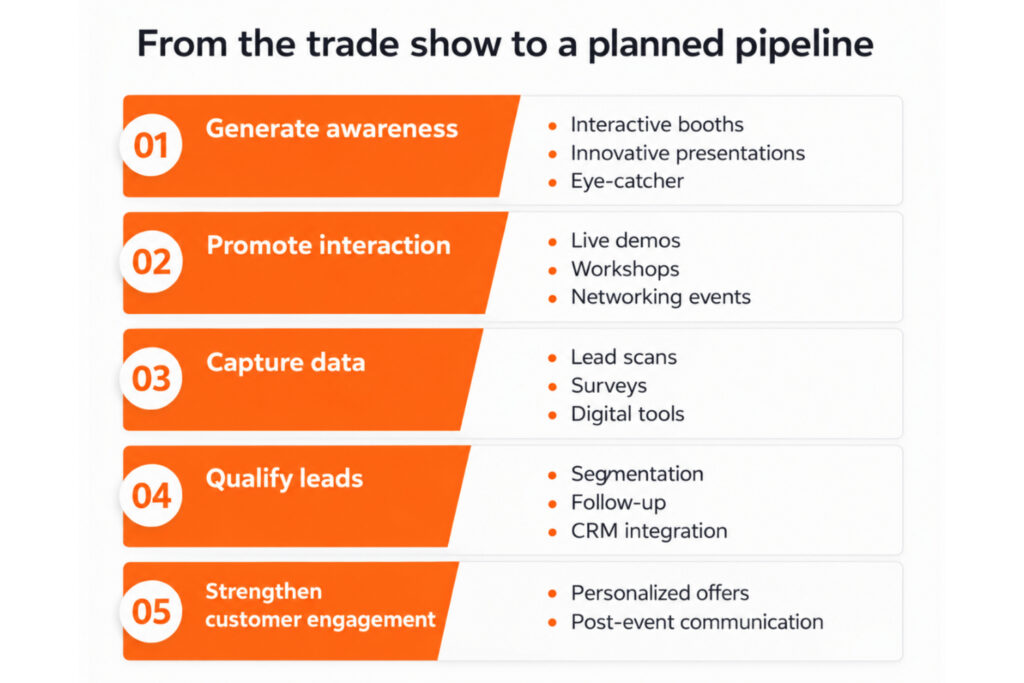
These 16 tactics for promoting your stand will turn your trade show presence into a platform for sustained business growth. From data-driven optimisation and interactive experiences to targeted ABM activities, every phase contributes to your overall success.
Ready to Take the Next Step?
The Digitale combines data-driven analysis with creative solutions to deliver outstanding results. Let’s take your trade show presence to the next level.
Are you looking for the right agency for your business right now?
Together, we’ll develop a suitable content marketing strategy for your project.


