How can you efficiently reach complex B2B target audiences in a fragmented digital landscape? And how can programmatic advertising campaigns in B2B marketing be managed to deliver real business impact?
For ISPO Munich, we solved this very challenge with a data-driven programmatic B2B approach. Through precise targeting, automated processes, and a clear strategy, we were able to not only increase reach but also measurably boost conversions and leads.
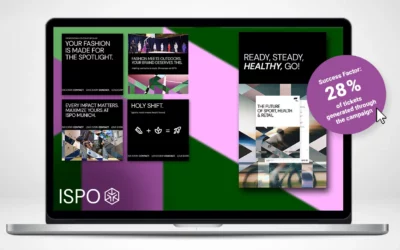
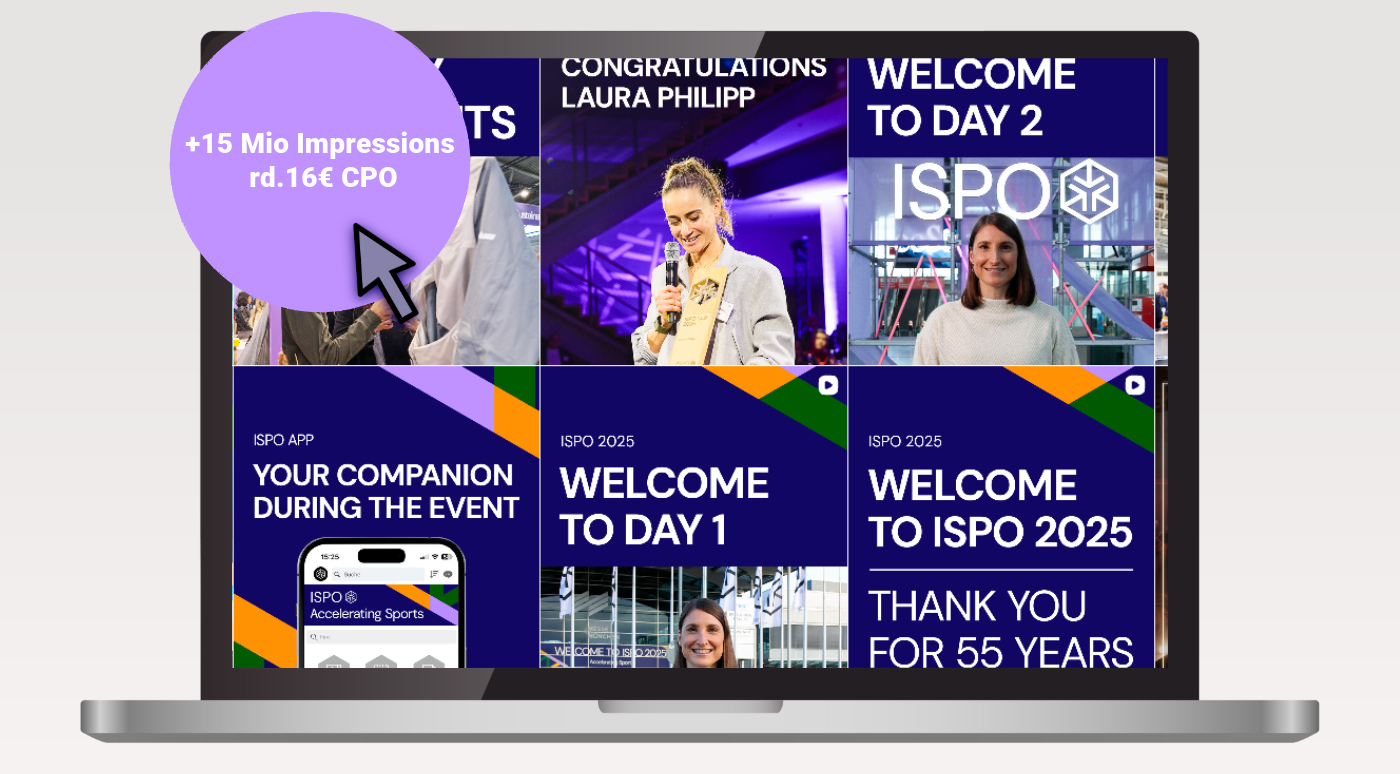
As part of our programmatic advertising strategy, we developed a scalable solution in collaboration with StackAdapt. The result: relevant campaigns, a scalable budget, data-driven decisions, and a significant contribution to ticket sales. Programmatic advertising has been proven to increase efficiency in B2B marketing: For ISPO Munich, over 15% of ticket sales were influenced by data—at a CPO of just €16.08.
- +15% sales influenced by programmatic B2B
- 13+ million impressions in relevant target groups
- CPO: €16.08 | CPC: €0.56
- Precise targeting via DSPs, RTB, and data models
What it’s all about
ISPO Munich is the leading trade show for the international sporting goods industry. At the same time, even established events in the B2B sector face the challenge of effectively reaching their target audience through digital channels.
The trade show serves as a central meeting place for brands, retailers, and decision-makers. Consequently, target audiences in B2B marketing and their decision-making processes are highly complex.
Digital channels are becoming increasingly important, while traditional advertising spaces and ads are losing their effectiveness. Companies must therefore find new ways to address their target audience in a targeted and purposeful manner with the right ad.
The solution lies in a clear strategy that combines programmatic advertising, data-driven targeting, and automated processes.
The Challenge
The biggest challenge was to precisely identify relevant B2B target audiences and reach them effectively.
In B2B marketing, decision-makers engage with content across various platforms and channels. Traditional campaigns often result in wasted reach, inefficient budget allocation, and a lack of relevance.
Additionally, the impact of programmatic advertising campaigns needed to be made measurable—from the first impression to conversion.
Solution: Programmatic B2B
The programmatic B2B approach we developed combines data-driven targeting, automated delivery, and continuous optimization.
The focus was on using DSPs, algorithms, and real-time bidding (RTB) to efficiently purchase relevant ad space. Automated processes enabled campaigns to be optimized in real time.
Through precise targeting, potential customers were addressed throughout their customer journey—based on behavior, interests, and B2B marketing signals.
This programmatic advertising approach enabled efficient budget utilization, increased reach, and maximized conversions.
In addition, programmatic approaches controlled by automated processes and algorithms were employed. These enabled real-time delivery across various platforms and significantly increased the efficiency of the programmatic advertising campaigns. In particular, programmatic technologies controlled via real-time auctions were increasingly utilized, enabling precise delivery.
Measures
The campaign was implemented across multiple coordinated channels and platforms.
For targeting, relevant audiences were defined using data, keywords, and intent signals. Account-based B2B marketing strategies were also employed.
The campaigns were delivered via various programmatic advertising platforms. DSPs, SSPs, and publisher networks were used to identify suitable ad placements.
At the same time, data-driven creatives were developed that were specifically tailored to each target audience.
A continuous optimization process ensured that all campaigns were delivered efficiently and effectively.
In addition to Stackadapt’s DSP, various SSP systems were also used to tap into additional ad placements and ad spaces through relevant publishers. Delivery was managed via bidding mechanisms within the framework of RTB and auction-based processes. In this process, both advertisers and publishers were systematically connected to activate high-quality inventory and relevant target audiences. This provides advertisers with a clear advantage in managing their campaigns.
Services Used
Our data-driven approach ensures that all measures and every programmatic ad are measurable and continuously optimized.
Analytics & BI
Strategy & Conception
Design, UX, Conversion
Content & Editing
Development & CMS
Marketing & Promotion
Results
The programmatic advertising campaigns delivered highly efficient results:
- Over 15% of ticket sales were influenced
- Cost per influenced sale: €11
- More than 13 million impressions (high reach)
- CPC: €0.56
- CPO: €16.08
These figures demonstrate the efficiency of programmatic B2B marketing and data-driven targeting.
Analysis of the Results
Compared to traditional platforms like LinkedIn or Meta, the advantage of programmatic advertising is clear:
- More efficient use of the budget
- Higher relevance of the ads
- Better performance throughout the entire customer journey
The combination of targeting, bidding, algorithms, and data-driven optimization ensures measurable success.
Particularly crucial was the combination of data-driven targeting, targeted use of channels, and a clear B2B marketing strategy throughout the entire customer journey.
Especially in B2B marketing, there are clear differences from traditional approaches, particularly when addressing complex decision-making processes.
Lessons Learned / Insights
This case study demonstrates that programmatic B2B is a key driver in modern B2B marketing.
Key success factors:
- precise targeting
- use of DSPs and RTB
- data-driven strategy
- continuous campaign optimization
Only through the synergy of these factors can target audiences be reached efficiently and conversions increased.
For success in the programmatic B2B sector, it is also important to intelligently link different data sources and identify potential target audiences from them. This is the only way to avoid wasted reach and achieve sustainable performance.
Conclusion
Programmatic B2B makes it possible to precisely target complex audiences and directly link marketing activities to business results.
The ISPO 2024 case study demonstrates that a data-driven approach not only increases efficiency but can also make a significant contribution to economic success.
“With The Digitale, we’ve had not just an agency, but a strategic partner by our side who understands our target audiences, thinks data-driven, and delivers measurable results. The ISPO campaign set new standards, both in terms of efficiency and the depth of its targeting.”